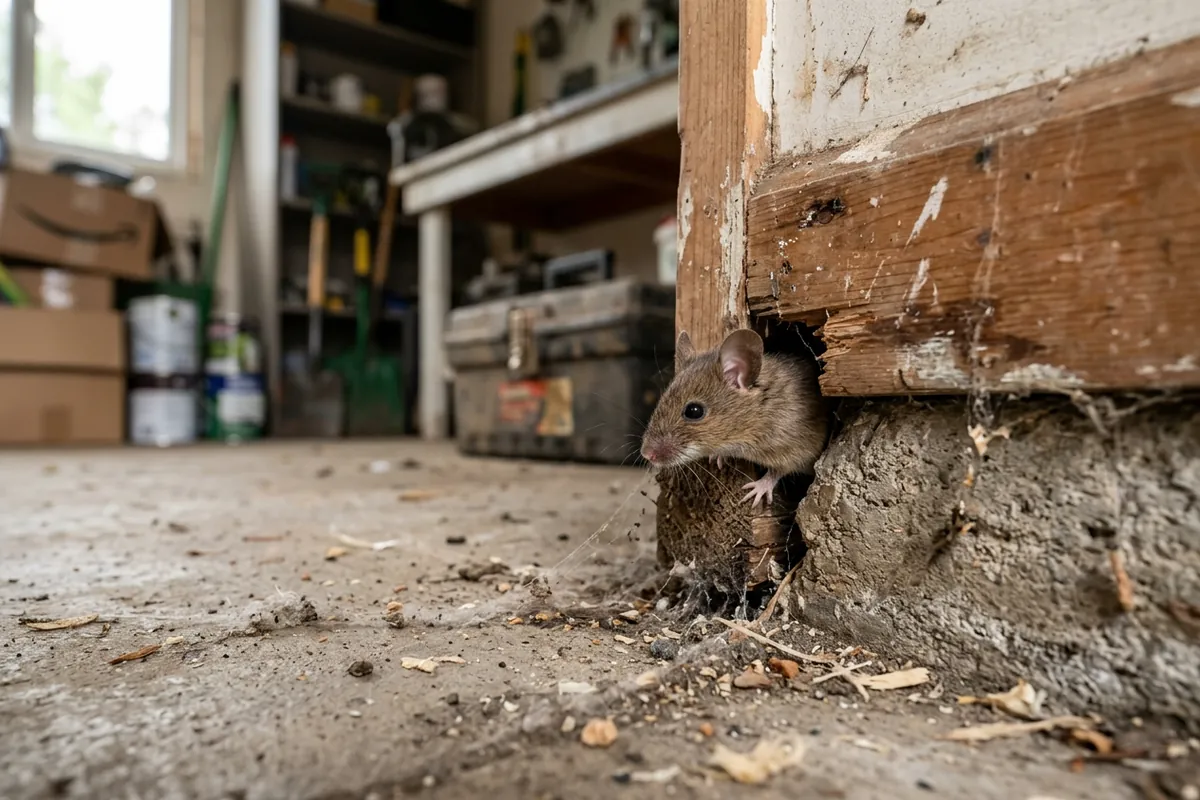
Rodents common around Fayetteville
- House mice, which can squeeze through a gap the size of a dime
- Roof rats, good climbers that travel along tree limbs and power lines into attics
- Norway rats, bigger burrowers found in crawl spaces, sheds and along foundations
Signs you have rodents
- Scratching or running sounds in the walls or ceiling, often at night
- Droppings in cabinets, drawers, the garage or the attic
- Chewed food packages, wires or insulation
- Greasy rub marks along walls and baseboards
- A musty smell in closed rooms or the crawl space
How rodent removal works
Trapping alone does not fix the problem if rodents can keep getting in. A good service has three parts. First, an inspection finds how they are getting in: gaps around pipes, vents, garage doors, rooflines and crawl space openings. Next, traps or bait stations remove the rodents already inside. Finally, exclusion seals the entry points with materials rodents cannot chew through.
Some companies also clean up droppings and replace damaged attic insulation. Ask for this if you have had a long-running problem.
Why it matters
Rodents chew wiring, which can be a fire risk, and their droppings and urine can carry disease. Damage to insulation in the attic or crawl space can also raise heating and cooling bills. The sooner they are out, the cheaper the fix.
How it works
- Call the number on this page. Tell us what pests you are seeing and where you live.
- Get connected. Your call goes straight to a licensed pest control company serving Fayetteville.
- Schedule a visit. Set up an inspection or treatment at a time that works for you.
Common questions
How much does rodent removal cost?
In North Carolina, sealing entry points commonly costs about $500 to $2,500 depending on the home, and ongoing bait station monitoring around $150 to $400 a year. A simple trapping job costs less.
How long does it take?
Trapping usually takes one to three weeks with a few follow-up visits. Exclusion work is often done in a day.
Do you use poison inside the house?
Most technicians avoid loose poison inside because rodents can die in the walls. Traps inside and locked bait stations outside are the usual approach.